
Dubai’s luxury property market is not just holding up — it is accelerating. New Knight Frank figures show 412 homes priced above $10 million changed hands in the first nine months of 2026, with Palm Jumeirah leading the charge.
The numbers:
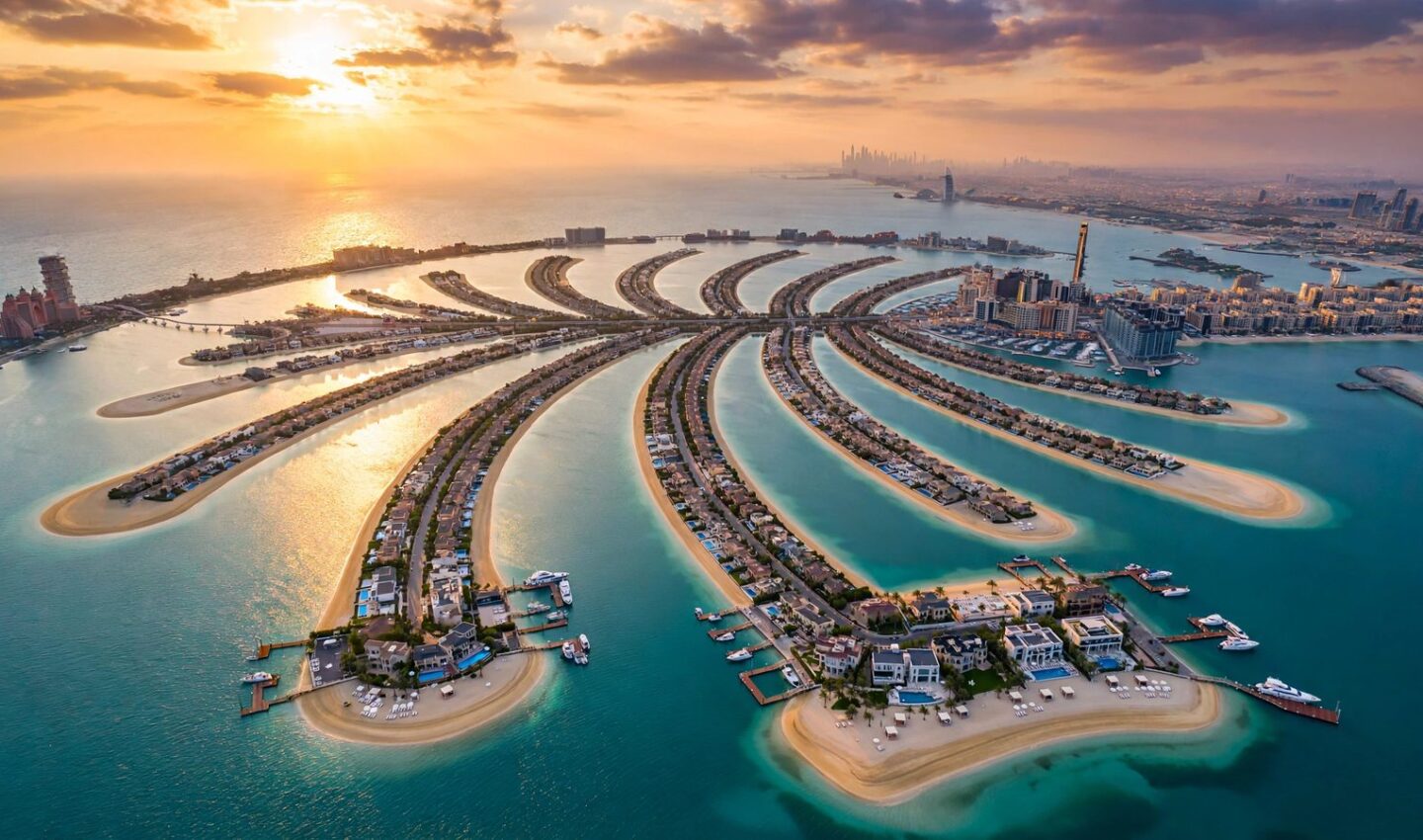
- Palm Jumeirah took 31% of all $10M+ sales in Q3 — 27 deals worth AED 2.01 billion
- 13 homes sold for more than $25 million in a single quarter
- Q3 alone saw 103 ultra-luxury deals, up 24% on last year, worth over $2 billion
The interesting part? Most buyers are not flippers. Knight Frank says demand is driven by people buying homes to live in or holiday in — a sign the luxury market is built on real demand, not speculation.
Dubai remains the world’s most active market for $10M+ homes. And with prime prices expected to rise around 3% next year, the city’s luxury story is far from over.
Follow DXB TALK for Dubai real estate, business, and what’s next.
Why the Palm Keeps Leading This End of the Market
To understand why Palm Jumeirah takes such a large share of ultra-luxury deals, it helps to remember what the island actually offers at this price level. Homes here are typically villas on private beachfront plots, along the fronds, or high-end apartments and penthouses around the trunk and Crescent, many attached to well-known resort and branded-residence developments. Supply is inherently limited: the island was built once, its plots are fixed, and a beachfront villa on a frond cannot be replicated a few streets inland. When wealthy buyers compete for a fixed number of homes in one recognised address, headline deals tend to cluster there.
The Palm also works as a lifestyle purchase, not just an address: private beach access and marina and dining options nearby, with quick road connections back to the mainland business districts. That combination helps explain why the island repeatedly appears at the top of these figures rather than featuring once and fading.
What End-User Demand Really Means
The most significant part of the report is not the deal count itself but who is buying. When purchases are driven mainly by investors expecting to resell quickly, prices can rise fast and fall just as fast when sentiment turns. Demand from people buying to live in a home, or to use it as a long-term holiday base, behaves differently. Owner-occupiers tend to hold for longer, renovate rather than flip, and keep homes off the resale market, which supports prices in the streets and fronds they favour.
That pattern also changes what sells. End-users care about layout, privacy, plot position, sun aspect and the condition of the villa itself, not only the headline address. For readers trying to read the market, the lesson is that at this level Dubai behaves less like a single market and more like a collection of very small ones, street by street and frond by frond.
📸 Follow @dxbtalk1 on Instagram for daily Dubai in photos →
Practical Implications If You Are Buying or Selling
For sellers on the Palm, strong headline figures are encouraging, but they are not a pricing strategy. Buyers at this level are internationally mobile and compare carefully, so presentation, realistic pricing against genuinely comparable recent sales, and patience matter more than testing the market at an ambitious figure and waiting.
As always with Dubai property, total costs go beyond the purchase price, and fees and charges should be confirmed with your agent and the relevant authorities before you commit, as they can change. It is also worth taking independent legal advice on any high-value transaction, particularly for off-plan or branded-residence purchases where payment plans and completion timelines vary by developer.
The Wider Picture for the Rest of Dubai
Activity at the very top of the market does not automatically lift every neighbourhood, and readers outside the luxury segment should treat these figures as context rather than a forecast for their own street. What a strong prime market does do is signal international confidence in Dubai as a place to live, which historically supports demand across the city — for rentals, for family villas in established communities, and for the services that grow around wealthy new residents.
The sensible way to follow this story is to watch whether demand stays end-user led in the quarters ahead, and whether other prime districts share in the activity or the Palm keeps its outsized share. DXB Talk will keep covering those shifts as the figures are published.