
Some editions are remembered for their size. GITEX 2022 is remembered for a name. When the world’s technology industry returned to the Dubai World Trade Centre from 10 to 14 October 2022, the 41-year-old Gulf Information Technology Exhibition stepped out under a new identity — GITEX GLOBAL — and staged the most ambitious edition in its history to justify it. Organisers called it “GITEX 3.0”: the metaverse edition, the flying-car edition, and the moment the show outgrew every regional label ever attached to it.
The largest edition ever staged
The numbers announced that week reset the show’s ceiling. More than 5,000 companies exhibited across 26 halls and two million square feet of space — a 25 percent increase on 2021, equivalent, as the organisers liked to note, to 33 football fields. Afterwards, His Highness Sheikh Hamdan bin Mohammed bin Rashid Al Maktoum confirmed the final tally: 5,000 exhibitors, 1,400 of them new to the show, and more than 138,000 visitors from 170 countries, 40 percent of them international. Remarkably, 52 percent of exhibitors were first-timers, and the debutants were not small: AMD, Tencent and ByteDance all chose GITEX GLOBAL 2022 for their first appearance, alongside Binance and a returning cast of global giants.
The economic footprint was measured too: an impact assessment credited the edition with supporting some 9,600 jobs and generating Dh463 million in disposable household income, a 55 percent increase on 2019.
Into the metaverse: X-VERSE and DevSlam
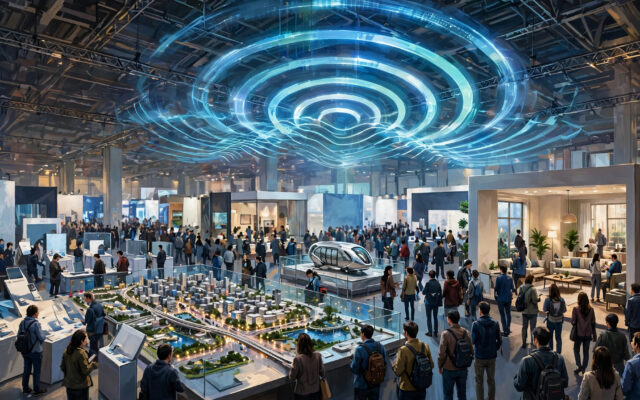
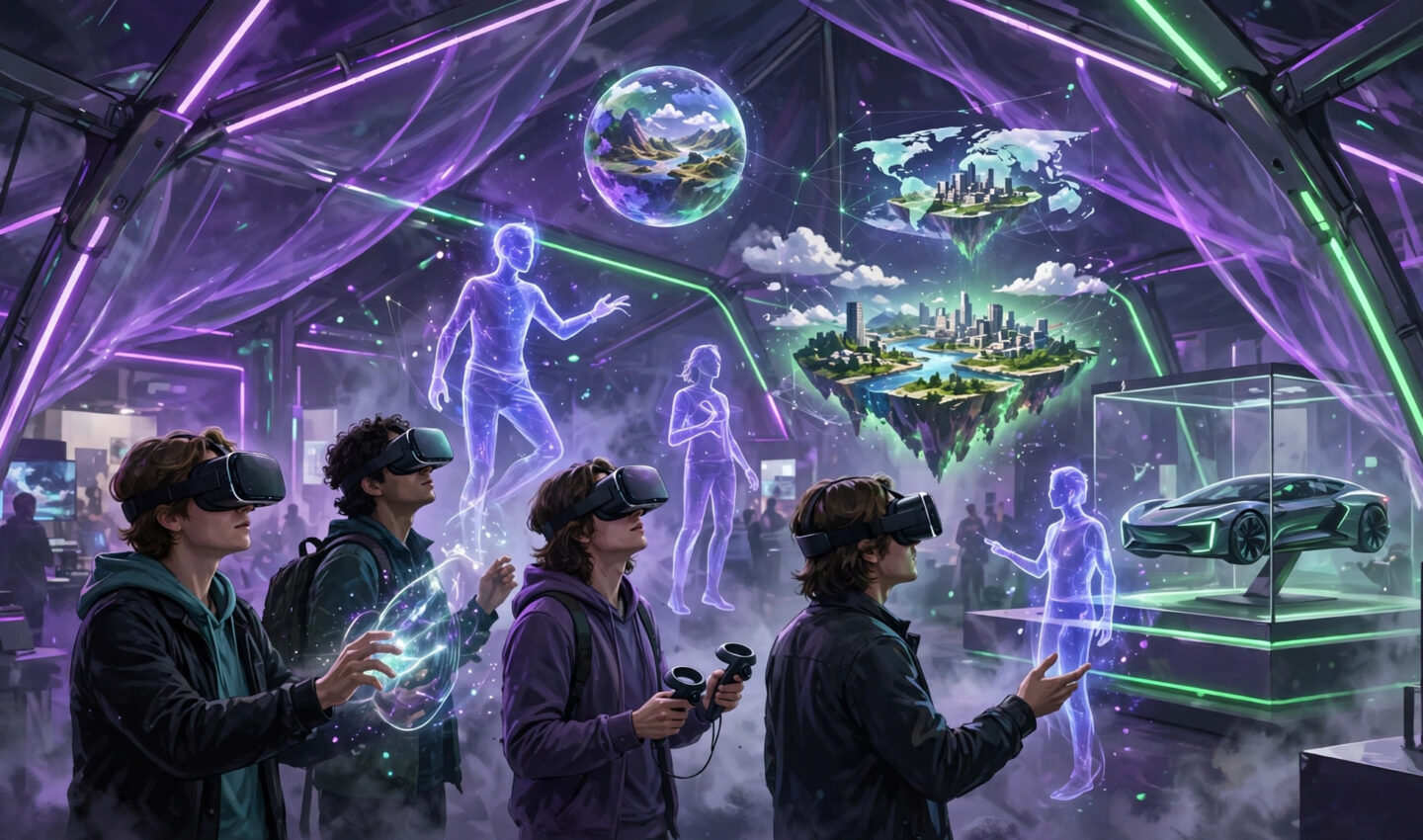
The signature launch of 2022 was X-VERSE, an immersive metaverse experience built with the TMRW Foundation in collaboration with Decentraland, where 28 experiential brands walked visitors through virtual worlds inside a vast tented pavilion. It was the physical centrepiece of a show organised around seven themes spanning the decentralised internet: North Star Dubai for startups, Ai Everything, the Future Blockchain Summit with Dubai’s virtual-assets regulator VARA, Fintech Surge, Marketing Mania, and another debut — Global DevSlam, the Middle East’s largest coder and developer meetup.
The timing was deliberate. Dubai had just launched its Metaverse Strategy and the National Program for Coders, and GITEX GLOBAL 2022 was where those policies met the market: 250 government entities exhibited alongside the startups and multinationals, and the startup show itself took a new name — North Star Dubai, rebranded from GITEX Future Stars — hosting more than 1,000 startups and what organisers called the biggest unicorn meetup of its kind, with 35 unicorns from 15 countries.
📸 Follow @dxbtalk on Instagram for daily Dubai in photos →
The flying car
And then there was the image that circled the planet. During show week, Chinese eVTOL maker XPENG AEROHT conducted the first public flight of its two-seat flying car, the X2, in Dubai — a 90-minute test flight watched by the world media that had gathered for GITEX. It was a masterclass in what the show had become: not just a place where the future is displayed, but where it is demonstrated, in the air, in front of the cameras.
A developer nation takes the stage
One of 2022’s quieter revolutions was Global DevSlam, the developer gathering built into the show’s fabric, which drew some 8,000 coders and developers into meetups, hackathons and workshops. It was the exhibition-floor expression of national policy: Dubai’s National Program for Coders aimed to attract 100,000 coders to the Emirates, and GITEX GLOBAL 2022 was where that ambition met its audience. Pycon MEA, the regional Python community gathering, also took place under the DevSlam umbrella — a sign that the show now courted the people who build technology as earnestly as the people who buy it.
Together with the metaverse theatre of X-VERSE and the startup gravity of North Star Dubai, DevSlam completed a triangle that defined the modern GITEX: spectacle to draw the world in, startups to give it a future, and developers to build it. Every edition since has run on that formula.
Seven shows, one city
By 2022 the GITEX umbrella had become a small universe of specialist events, each strong enough to anchor a week of its own: the flagship exhibition; Ai Everything for the AI community; the Future Blockchain Summit, where Dubai’s virtual-assets regulator VARA engaged the crypto industry directly; Fintech Surge for the new finance; Marketing Mania for the region’s brand builders; North Star Dubai for startups; and Global DevSlam for developers. Staged simultaneously, they turned a business trip into an ecosystem tour — a founder could pitch investors in the morning, a minister could inspect a flying car at noon, and a coder could ship a hackathon project by night. That density, more than any single product launch, is what rivals have never managed to copy.
What GITEX 2022 meant for Dubai
The rebrand was the message. “GLOBAL” told the world that Dubai no longer saw its tech week as the Middle East’s largest show, but as the world’s — and the 2022 edition’s scale, international mix and sheer audacity made the claim credible. Within a year, the brand would open in Africa and announce Europe. The road to that future started here.
The edition’s afterlife confirmed the judgement. In the months that followed, the X-VERSE tent became one of the most reproduced images of the global tech year, the flying-car flight anchored XPENG’s international story, and the rebrand stuck instantly — within a year, “GITEX GLOBAL” was simply what the world called the show, as if it had always been so. Few forty-one-year-old institutions manage a reinvention that complete; fewer still manage it while posting the largest numbers in their history. Dubai’s tech week entered its fifth decade not as a legacy event defending its relevance, but as the industry’s pace-setter.
Follow the full story in our history of GITEX, from a single hall in 1981 to a show on three continents.
Part of the DXB Talk GITEX archive: The History of GITEX