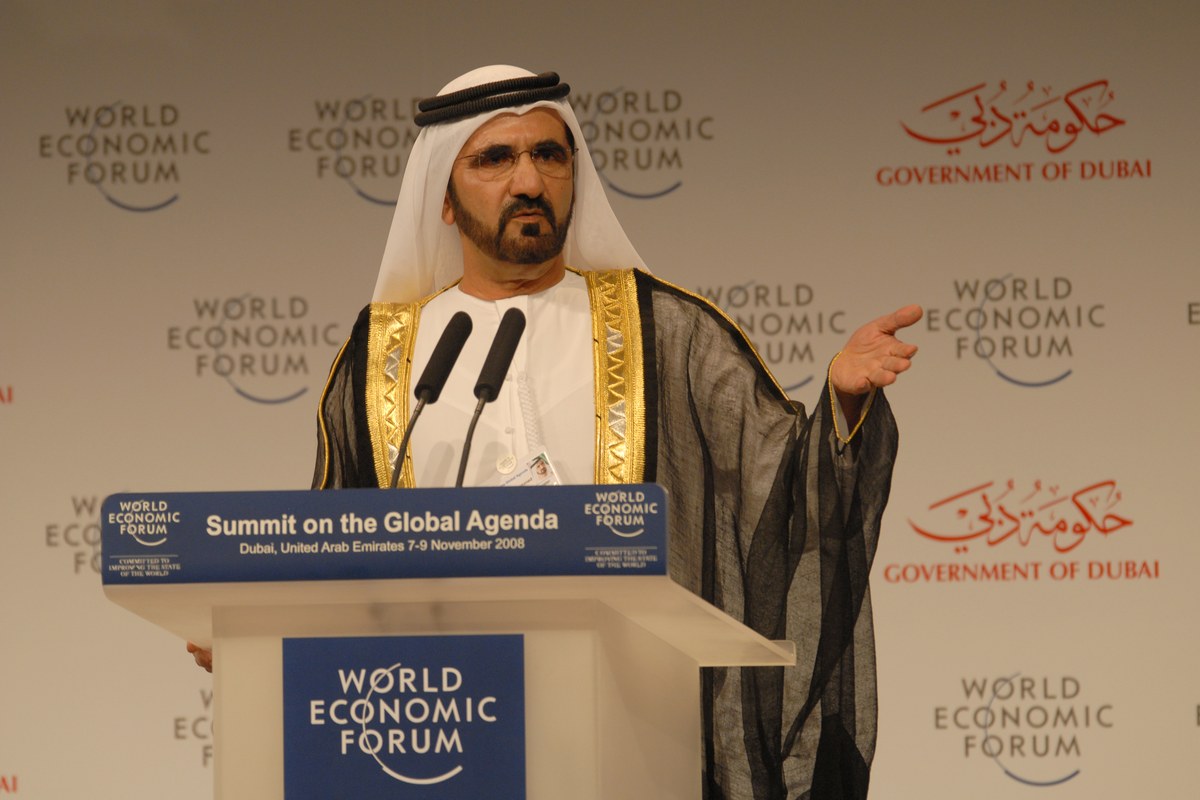
Most rulers leave their philosophy to historians. HH Sheikh Mohammed Bin Rashid Al Maktoum wrote his down himself. “My Vision: Challenges in the Race for Excellence”, published in 2006 — the year he became Ruler of Dubai — is the operating manual of modern Dubai, written by its author-in-chief. If you want to understand why the city works the way it does, this is the book to read.
It is part memoir, part management treatise and part declaration of intent. Drawing on his journey from a Shindagha childhood to the ruler’s office, Sheikh Mohammed explains what development means, how governments should behave, and why a small desert city could reasonably aim at world leadership. Two decades of Dubai’s history since publication read like the book being carried out chapter by chapter.
The Race for Excellence
The book’s organising idea is in its title. Development, for Sheikh Mohammed, is a race — against other cities, against complacency, and above all against the limits of what a nation believes possible. His motto distils it: “In the race of excellence… there is no finish line.” There is no point at which a government may declare itself finished and relax; the moment it does, the race is lost.
That single idea explains the rhythm of Dubai under his rule. Every achievement — the Metro, the Burj Khalifa, the paperless government — is treated not as a conclusion but as a baseline for the next target. The D33 agenda to double the economy, launched in 2023, is the race metaphor turned into a spreadsheet.
Government as a Service
A second theme runs through the book: government should behave like the best of the private sector. Departments exist to serve people; their performance can be measured; their leaders can be compared, ranked and replaced. The citizen and the investor are customers whose time and trust must be earned.
Dubai’s residents experience this philosophy daily — in service centres designed like bank branches, in departments whose results are published, in a government that became the world’s first to go fully paperless in 2021. These are not accidents of administration. They are “My Vision” implemented.
📸 Follow @dxbtalkofficial on Instagram for daily Dubai in photos →
Development Measured: People’s Lives
The book is equally clear about the purpose of it all. Growth is not the goal; the quality of people’s lives is. His official profile line expresses the same creed: “We are building a new reality for our people, a new future for our children, and a new model of development.” Roads, zones and towers are instruments. The product is a society where people can build, trade, learn and live well.
That priority explains initiatives that pure economists might question — ministers for happiness and tolerance in his 2016 federal cabinet, the Arab Reading Challenge for schoolchildren, housing programmes for Emirati families. In the book’s logic, they are not ornaments on development. They are development.
A Book That Became a Building Plan
Rulers’ books are usually published for the shelf. “My Vision” was published for the construction site. Read it beside the timeline — Expo won in 2013, the Hope Probe at Mars in 2021, the Museum of the Future in 2022, the Dubai 2040 master plan — and the overlap is unmistakable: the philosophy preceded the projects, and the projects keep citing the philosophy.
For anyone doing business in Dubai, governing a city anywhere, or simply trying to understand how a pearl port became a global capital in one lifetime, “My Vision” remains the primary source. The city is the book, built.
Frequently Asked Questions
What is “My Vision” and when was it published?
It is Sheikh Mohammed’s book setting out his philosophy of leadership and development, published in 2006, the year he became Ruler of Dubai and Prime Minister of the UAE.
What is the book’s central idea?
That development is a race for excellence with no finish line: governments must keep improving, measure themselves against the best, and never treat any achievement as final.
What does the book say about government?
That government should run with private-sector urgency — serving people as customers, measuring performance publicly, and judging development by quality of life rather than by projects alone.
Why does the book still matter today?
Because Dubai’s subsequent history — Expo 2020, the paperless government, the Hope Probe, the D33 agenda — follows its philosophy so closely that the book reads as the city’s long-term plan in prose.