Ask ten Dubai residents about the move from Al Sufouh to Umm Suqeim and you will get ten confident answers, at least four of which are out of date. This guide sticks to how things work now: the systems involved, the steps in their real order, and the details that decide whether it goes smoothly or becomes a story you tell at dinner.
Moving day and settling
Dubai moves are a service industry: licensed movers pack, move and reassemble in a day, priced by volume and access (book the lift and loading bay in tower buildings — the building’s move-in permit and deposit are standard). Sequence the admin: Ejari for the new home, DEWA transfer, internet (check the new building’s provider early — it may differ), access cards, and the address updates that matter (bank, employer, school).
Give Umm Suqeim a fair first month: find the supermarket, the pharmacy, the clinic, the morning coffee. The residents who love a move are the ones who explore their new district like tourists for the first fortnight instead of commuting back to the old one’s comforts.
The two districts, side by side
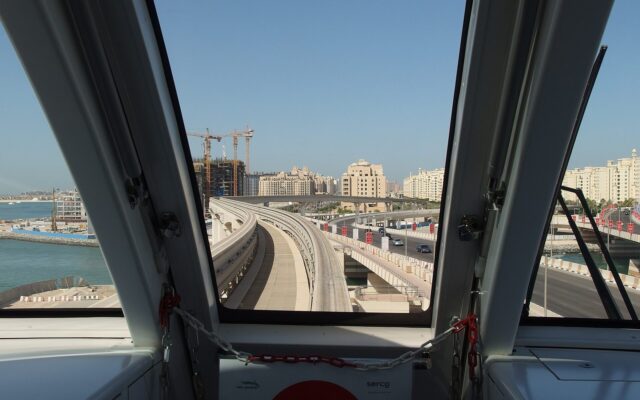
Al Sufouh and Umm Suqeim are different Dubais. Al Sufouh is a quiet coastal strip between the Marina and Al Barsha, home to villas, palaces and media free zones nearby. Umm Suqeim is the beachside villa strip below the Burj Al Arab, home to Kite Beach and the fishing harbour. A move between them is less a change of flat than a change of rhythm: the shops you default to, the roads you live on, the neighbours you get. Residents who make this move happily are the ones who wanted what the other district actually offers — not a cheaper version of the same life.
Rent buys different things in each: compare like-for-like units (same bedrooms, building age, parking) rather than headline averages, because the mix differs — one district’s stock is villas, the other’s towers, and averages lie. Your shortlist from listings is a starting point; the street-level visit is the decision.
📸 Follow @dxbtalkofficial on Instagram for daily Dubai in photos →
Mistakes residents make (so you don’t have to)
The recurring mistakes are boringly consistent. Acting on a friend’s experience from three years ago in a system that has since moved online. Paying an intermediary for something the official app does free. Signing — a lease, a contract, a package — before reading the clause that governs leaving it. And assuming that because something is common practice it is therefore permitted: Dubai tolerates a lot informally right up to the moment it doesn’t.
The antidote is unglamorous: verify on the official channel, read the document, ask what happens if you need to stop or leave, and get commitments in writing. None of this slows a well-run process by more than a day, and it prevents the month-long unravellings that fill the community forums.
A realistic timeline
Set expectations in weeks, not days. The straightforward version of this process, with documents ready, typically completes in a few working days of actual processing spread across one to three weeks of appointments, approvals and deliveries. The complicated version — a document to attest, a record to correct, a counter that needs a second visit — doubles that, and it is still normal.
The timeline you control is your own preparation: documents gathered, forms understood, fees budgeted, appointments booked at the calm end of the day. Residents who prepare experience Dubai’s systems as impressively efficient; residents who improvise experience the same systems as a maze. The difference is rarely the system.
The seasonal angle
Almost everything in Dubai has a season. Summer compresses life indoors and slows some official processes as people travel; the winter months crowd the diaries, the roads and the appointment systems; Ramadan reshapes working hours and the rhythm of the day itself. Where timing is yours to choose, choose deliberately: the same task can be a calm errand in one month and a campaign in another, purely because of when the whole city is trying to do it too.
Common questions
Can I do most of this online?
Mostly, yes — Dubai has moved the majority of resident transactions into official apps and portals. The steps that still need your presence are usually biometrics, medicals, signatures and original-document sighting. Start online, and attend in person only for the step that requires your body.
Where do residents get reliable local detail?
Community groups for your district, school or workplace hold the lived detail — which branch is quick, what the process felt like last month. Combine that texture with the official source for the rule itself, and you have the full picture.
What is the most common mistake?
Acting on out-of-date advice. Systems here change yearly; a friend’s experience from a previous contract or a previous visa is a starting point, not a rule. The second most common mistake is paying an intermediary for a step the official app handles directly.
Where do residents get reliable local detail?
Community groups for your district, school or workplace hold the lived detail — which branch is quick, what the process felt like last month. Combine that texture with the official source for the rule itself, and you have the full picture.
The bottom line
The pattern underneath the move from Al Sufouh to Umm Suqeim is the pattern underneath most of Dubai life: the systems work, the paperwork is the price, and preparation is the discount. Do it once, properly, and you join the residents who find this city easy. More step-by-step resident guides live at dxbtalk.com.