

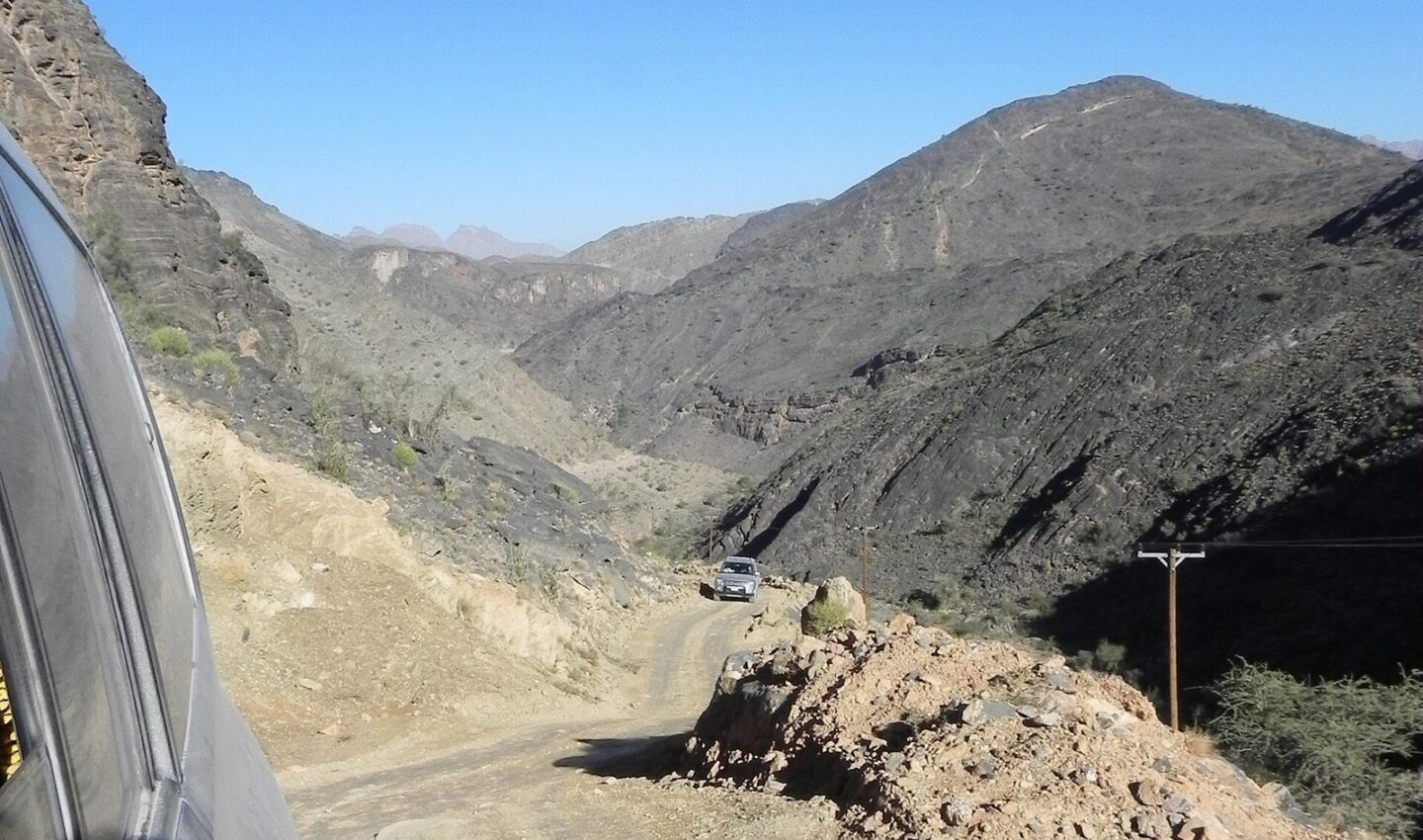
You can drive from Dubai to Oman in your own car if you carry your passport, driving licence and Mulkiya, buy Oman car insurance (the Orange Card) at or before the border, and use a crossing that accepts tourists and expatriate residents — Hatta is the most popular from Dubai. Allow extra time at weekends, and check visa rules for your nationality before you set off, because entry requirements differ.
Quick facts
- Main crossings from Dubai: Hatta–Al Wajajah (for Muscat), plus northern crossings near Ras Al Khaimah and the Musandam route via Khasab
- Drive time: Dubai to Muscat is typically around 4.5–5.5 hours depending on border queues; Khasab is about 3 hours
- UAE exit fee: Typically around AED 35 per person — check the official portal for the current fee
- Oman insurance: Typically around AED 100–200 for short-term cover — check providers at the border for the current price
- Key rule: If the car is financed or not owned by you, you generally need a No Objection Certificate (NOC) from the bank or owner
How to drive to Oman, step by step
- Check your Oman visa position first. Many nationalities get a visa on arrival or a short free entry, GCC residents may qualify for an eVisa category, and others must apply in advance via the Royal Oman Police eVisa site. Confirm for your exact passport and residence status.
- Gather your car papers. You need your passport (with at least six months’ validity as a safe rule), UAE driving licence, Emirates ID and the vehicle Mulkiya. If there is a bank loan on the car, get the bank’s NOC for taking it to Oman before you travel.
- Sort Oman car insurance. Your UAE policy almost never covers Oman. Buy the Orange Card — short-term Oman third-party insurance — online from UAE insurers before you go, or at booths near the border. Buying ahead saves a long queue.
- Clear your UAE fines. Unpaid traffic fines can hold you up at exit. Check and pay on the RTA app, Dubai Police app or DubaiNow a few days before.
- Exit the UAE. At the border post, present passports for exit stamping and pay the exit fee per person. Keep the slip until you return.
- Enter Oman. On the Oman side, show your passport, visa or eVisa approval, driving licence and Mulkiya, and your Orange Card insurance. The car may be briefly inspected. You will get an entry stamp and a customs paper for the vehicle — keep it safe.
- Drive on the right, obey local limits. Oman drives on the right like the UAE, but speed cameras are frequent and fines are strict, especially on the Muscat expressway.
- Re-enter the UAE the same way. Hand back the vehicle paper on exit from Oman, get your exit stamp, then complete UAE entry. Your Emirates ID speeds up the UAE side.
Documents needed — full checklist
- Passport for every traveller, plus UAE residence visa where relevant
- Emirates ID and UAE driving licence for the driver
- Vehicle registration card (Mulkiya) in the driver’s or a travelling owner’s name
- Bank or owner NOC if the car is financed, rented or company-owned — rental cars need explicit written permission from the rental company, and many do not allow Oman trips at all
- Orange Card Oman insurance certificate
- Oman eVisa printout or approval if your nationality needs one in advance
Costs in AED
Budget for the UAE exit fee (typically around AED 35 per person — check the official app/portal for the current fee), Oman visa fees where they apply, short-term Orange Card insurance (typically around AED 100–200 for a short trip — check the official app/portal for the current fee), fuel — which is similarly priced to the UAE — and Salik-style tolls are not a feature of the Oman drive, but Muscat parking and hotel costs vary. Carry a payment card and some cash for border booths.
Common mistakes
The trip-killer is arriving in a financed car without a bank NOC — officers can and do turn people back. Second is assuming your UAE insurance covers Oman; it does not, and driving uninsured there is illegal. Third is using the wrong crossing: the Mazyad and some Al Ain-area crossings have restrictions for non-GCC travellers at times, so most Dubai residents heading to Muscat should use Hatta. Finally, do not let your passport sit below six months’ validity, and do not rely on a photo of your Mulkiya — bring the physical card or the official digital version in the RTA app.
FAQ
Can I take a rental car from Dubai to Oman?
Only with the rental company’s written permission and Oman insurance arranged through them. Many rental agreements forbid cross-border travel, so ask before you book, not at pickup.
Which border should I use for Muscat?
Hatta–Al Wajajah is the standard route from Dubai to Muscat, with insurance booths and full immigration facilities. Start early on public-holiday weekends when queues build.
Do UAE residents need a visa for Oman?
It depends on your nationality and job category. Some passports get visa-free or on-arrival entry; some GCC resident categories must apply for an eVisa in advance. Always check the Royal Oman Police eVisa site for your passport.


