Modern Dubai is famous for towers and malls, but the city began around a narrow creek, coral-stone houses and busy trading docks. One day in the older districts gives newcomers a completely different sense of place. This walkable route links the Al Fahidi Historical Neighbourhood, the creek crossing, Baniyas Road and the souks on both banks. You do not need a car or an expensive tour — just comfortable shoes, water and small change.
Table of Contents
Start the Morning in Al Fahidi
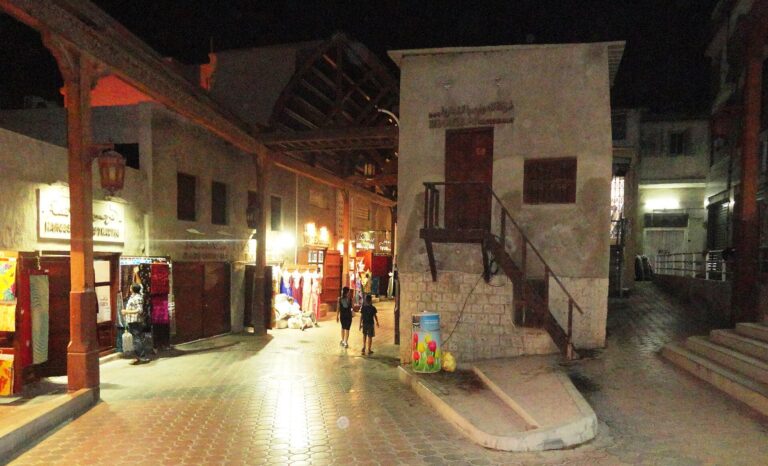
Begin in Al Fahidi Historical Neighbourhood in Bur Dubai, ideally soon after places open and before the midday heat builds. This compact quarter of lanes and courtyards preserves the Dubai of the early 1900s, when wealthy merchants built homes from coral stone, gypsum and teak. Look up as you wander: the tall wind towers, or barjeel, were a natural form of air-conditioning, funnelling breezes down into the rooms below.
Many houses are now small museums, galleries, cultural centres and quiet cafés. Step into traditional majlis rooms, see old photographs of pearl divers and traders, and learn how coffee and dates are served to guests. Allow at least ninety minutes here. The lanes are maze-like, and getting slightly lost is part of the pleasure.
Nearby stands Al Fahidi Fort, one of the oldest surviving buildings in Dubai and long associated with the Dubai Museum area. Even viewing it from outside sets the scene, as its thick walls contrast sharply with the glass towers across the creek. Check current opening arrangements before you go, as museum access can change.
Walk Towards the Creek and Baniyas Road
From Al Fahidi, walk towards the water. The atmosphere changes quickly from quiet lanes to the working creek, where wooden dhows still load goods for ports across the Gulf. Boats piled high with boxes, tyres and fabrics are a reminder that Dubai was a trading port long before it was a global skyline.
Follow the creekside path and look across to Baniyas Road on the Deira bank. One of the oldest main roads in the city, it runs alongside Deira with hotels, banks, offices and dhow wharves along its length. It is not polished or pretty, and that is why it is worth seeing — this is everyday, working Dubai.
Cross the Water by Abra
The highlight of the day for many visitors is also the cheapest. Traditional wooden abras ferry passengers across Dubai Creek in just a few minutes, and the standard crossing costs around AED 1 per person at the time of writing. Pay the driver as you board, sit on the wooden bench in the middle, and enjoy the view in both directions.
- Crossings run very frequently throughout the day between the Bur Dubai and Deira stations.
- Have a one-dirham coin ready where possible, as drivers may have limited change at busy times.
- Board carefully and stay seated while the boat is moving, especially with children.
- Consider one crossing in daylight and, if time allows, another near sunset for completely different light.
Private abra hire for a longer creek cruise is also offered for a higher rate. Confirm the price and duration before you set off.
Explore the Souks on Both Banks
On the Deira side, you are steps from some of the city’s best-known markets. The Gold Souk glitters with window after window of jewellery, while the nearby Spice Souk fills the air with saffron, frankincense and dried lemons. A short walk away, the Perfume Souk is the place to explore oud and attar oils. Prices for many items are negotiable, so ask politely, compare a few shops, and never feel pressured to buy.
Back on the Bur Dubai side, the Textile Souk offers fabrics, pashminas and garments in restored creekside buildings. Tailors nearby can turn fabric into clothing, but agree the price and collection date in writing first.
Timing, Dress and Practical Tips
The best months are roughly November to March, when mornings and late afternoons are pleasant. In hotter months, start early, rest indoors over midday, and return to the creek for the evening.
Dress modestly, with shoulders and knees covered — good practice in older districts and respectful if your day includes a mosque area or a cultural centre with religious spaces. Carry water, sunscreen and a hat, and take care crossing busy roads near Baniyas Road. One unhurried day here explains Dubai’s story better than any skyline viewpoint.