This is a practical guide to living near Danube station — written for people who live here, not visitors passing through. It covers the systems you will deal with, the documents and decisions that matter, and the mistakes that cost residents time and money, in the order you will actually meet them.
Mistakes residents make (so you don’t have to)
The recurring mistakes are boringly consistent. Acting on a friend’s experience from three years ago in a system that has since moved online. Paying an intermediary for something the official app does free. Signing — a lease, a contract, a package — before reading the clause that governs leaving it. And assuming that because something is common practice it is therefore permitted: Dubai tolerates a lot informally right up to the moment it doesn’t.
The antidote is unglamorous: verify on the official channel, read the document, ask what happens if you need to stop or leave, and get commitments in writing. None of this slows a well-run process by more than a day, and it prevents the month-long unravellings that fill the community forums.
The station and its patch
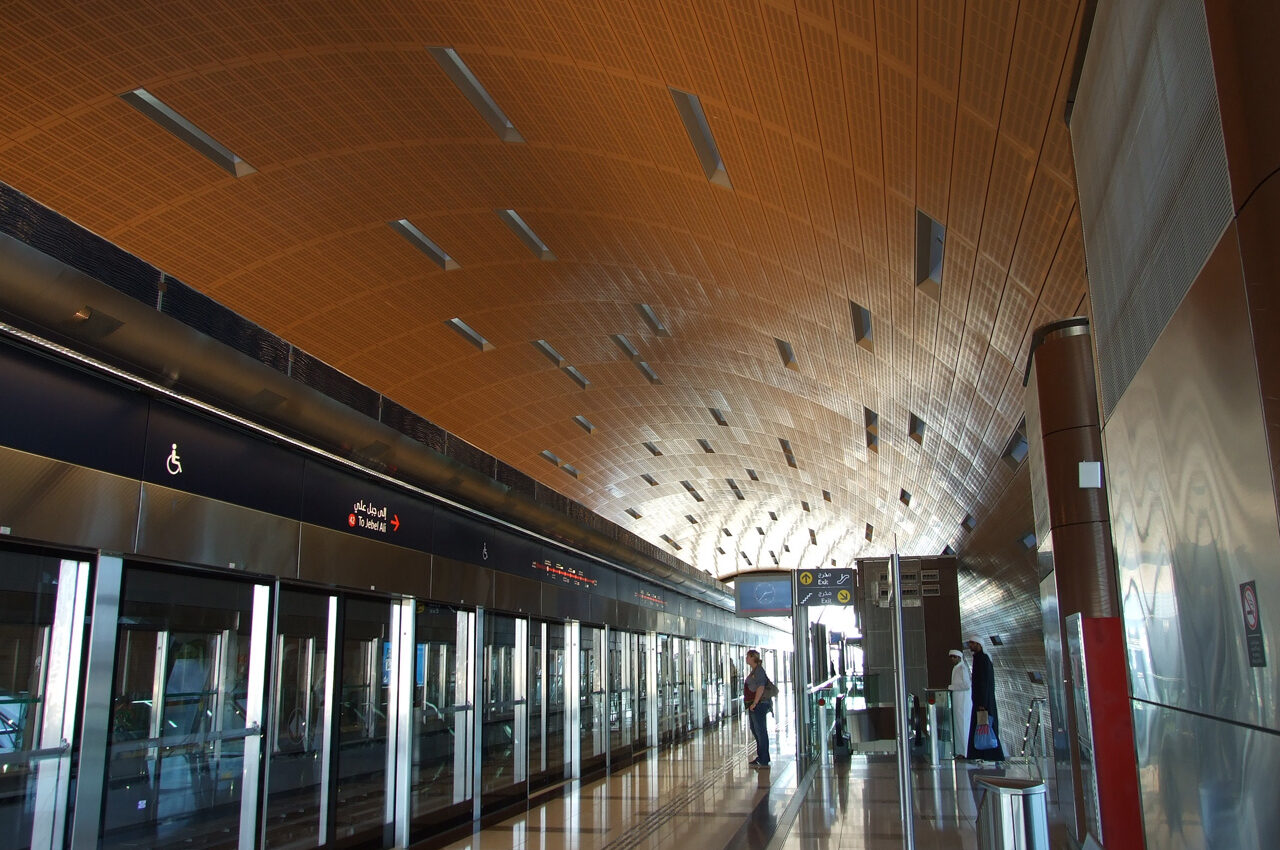
Danube is a Red Line station serving the Jebel Ali industrial area. For residents, a metro station is not just transport — it anchors the local housing market, the bus routes and the daily walking radius. The patch around Danube station has its own character: the housing within a ten-minute walk trades at a premium for the access, and the streets near the station carry the coffee shops, groceries and services that commuters use twice a day.
Nol cards work across metro, tram, buses and paid parking, and the S’hail app plans the whole journey door to door. From Danube, feeder buses extend the station’s reach into the surrounding neighbourhoods — learn your feeder route numbers early, because they define which ‘near the station’ addresses are actually convenient.
Getting help: official channels and community knowledge
Two kinds of help exist and they are good at different things. Official channels — the authority’s app, call centre and service centres, plus licensed service centres such as Amer and the typing centres — own the rules and the transactions. Community knowledge — the residents’ groups for your district, school or nationality — owns the lived detail: which branch is efficient, which counter to ask for, what the process felt like last month.
Use them in that order for anything with legal or financial weight: official source for the rule, community for the texture. Be wary of any individual who offers to bypass an official step for a fee — in a city this digitised, the bypass is usually a detour into a scam the authorities warn about by name.
The area beyond the platform
Judge the Danube area by the walk, not the map: pavement continuity, shade, safe crossings and what is open at the hour you come home. Station areas in Dubai have been filling in with mid-rise housing, clinics, gyms and supermarkets precisely because residents pay for the convenience — the newer the cluster, the more complete the daily-life layer tends to be.
For renters, ‘near Danube station’ in a listing can mean anything from two to twenty minutes — verify with your own feet, in the heat, with the route you would actually walk. That single test is worth more than every photograph in the advert.
One more thing residents learn
Experience adds a footnote to almost every Dubai system: the second time you do this, it takes half the time and a quarter of the stress. The learning curve is the real cost of the first attempt, which is why residents swap notes so freely — in the community groups, at the school gate, in the queue itself. Ask the person who did it last month, and offer your own notes when you are the one who has done it. The city’s informal knowledge network is one of its genuine infrastructures.
Common questions
What is the most common mistake?
Acting on out-of-date advice. Systems here change yearly; a friend’s experience from a previous contract or a previous visa is a starting point, not a rule. The second most common mistake is paying an intermediary for a step the official app handles directly.
Where can I double-check the current rules?
On the official channel for the authority involved — its website, app or service centre — because fees, hours and procedures for living near Danube station are updated by official decision and summaries like this one age. Verify the step you are about to pay for, on the day you pay for it.
What is the most common mistake?
Acting on out-of-date advice. Systems here change yearly; a friend’s experience from a previous contract or a previous visa is a starting point, not a rule. The second most common mistake is paying an intermediary for a step the official app handles directly.
Where do residents get reliable local detail?
Community groups for your district, school or workplace hold the lived detail — which branch is quick, what the process felt like last month. Combine that texture with the official source for the rule itself, and you have the full picture.
The bottom line
Handled in the right order, living near Danube station is a solved problem — thousands of residents do it every month. Prepare the documents, use the official channels, keep your records, and it becomes one more piece of Dubai admin that quietly stays done. This guide is part of DXB Talk’s resident library at dxbtalk.com, where the guides interlock the way the systems do.