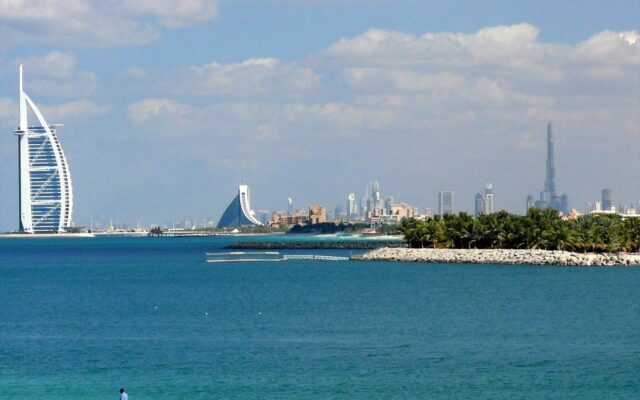
For years the Burj Al Arab was the famous hotel you could only admire from the beach — unless you were staying there or had a restaurant booking. That changed with the Inside Burj Al Arab tour, a guided visit that takes you into the sail-shaped landmark to see the atrium, the Royal Suite and the curated exhibition spaces, without needing to be a hotel guest. For a first-timer it is the one way to see whether the interior lives up to the exterior, and it does: the scale, colour and sheer confidence of the place are like nothing else in Dubai.
What the Tour Includes
The experience begins at the dedicated welcome venue on Jumeirah Street, near the hotel’s entrance, where you check in before being taken across to the island. The guided tour, led in small groups, typically includes:
- The atrium — one of the tallest in the world, rising the full height of the building, with its changing colours, fountains and the famous aquarium-lined entrance of the seafood restaurant.
- The Royal Suite — the two-floor showcase suite on the 25th floor, with its private cinema, rotating bed, gold-plated details and views down the coast: the part of the tour everyone photographs most.
- The Experience Suite and exhibition areas — displays on the building’s design and construction, original sketches and materials, and interactive exhibits about how the island and tower were engineered.
- Photo opportunities — the tour builds in stops for photographs, including classic shots inside the atrium and, where offered, on the terrace areas.
Some ticket types bundle extras such as a gold-leaf cappuccino or refreshments at the tour’s lounge; check the official Inside Burj Al Arab website for the current packages, what’s included and the day’s timings before booking, as the format is updated from time to time.
Booking, Prices and Dress Code
Book timed tickets online in advance — walk-up availability is not guaranteed, and popular slots during the winter season fill early. Prices vary by package and season, so rely on the official site for current rates rather than resellers. This is one attraction with a real dress code: the hotel’s standard is smart and elegant, so expect to be turned away in beachwear, shorts-and-flip-flops combinations or sportswear. Smart casual — long trousers or a neat dress, closed or smart shoes — is the safe uniform, and it suits the photos better anyway.
Rules Inside
The Burj Al Arab remains a working hotel full of paying guests, so the tour follows firm etiquette: stay with your guide, photography is limited to the designated areas and times, and children must be supervised throughout. Children are welcome on the tour (ticket rules by age are on the official site), but the pace and content suit older children best. Arrive at the welcome centre ahead of your slot — late arrivals generally cannot join a tour already in progress.
Getting There and Making a Day of It
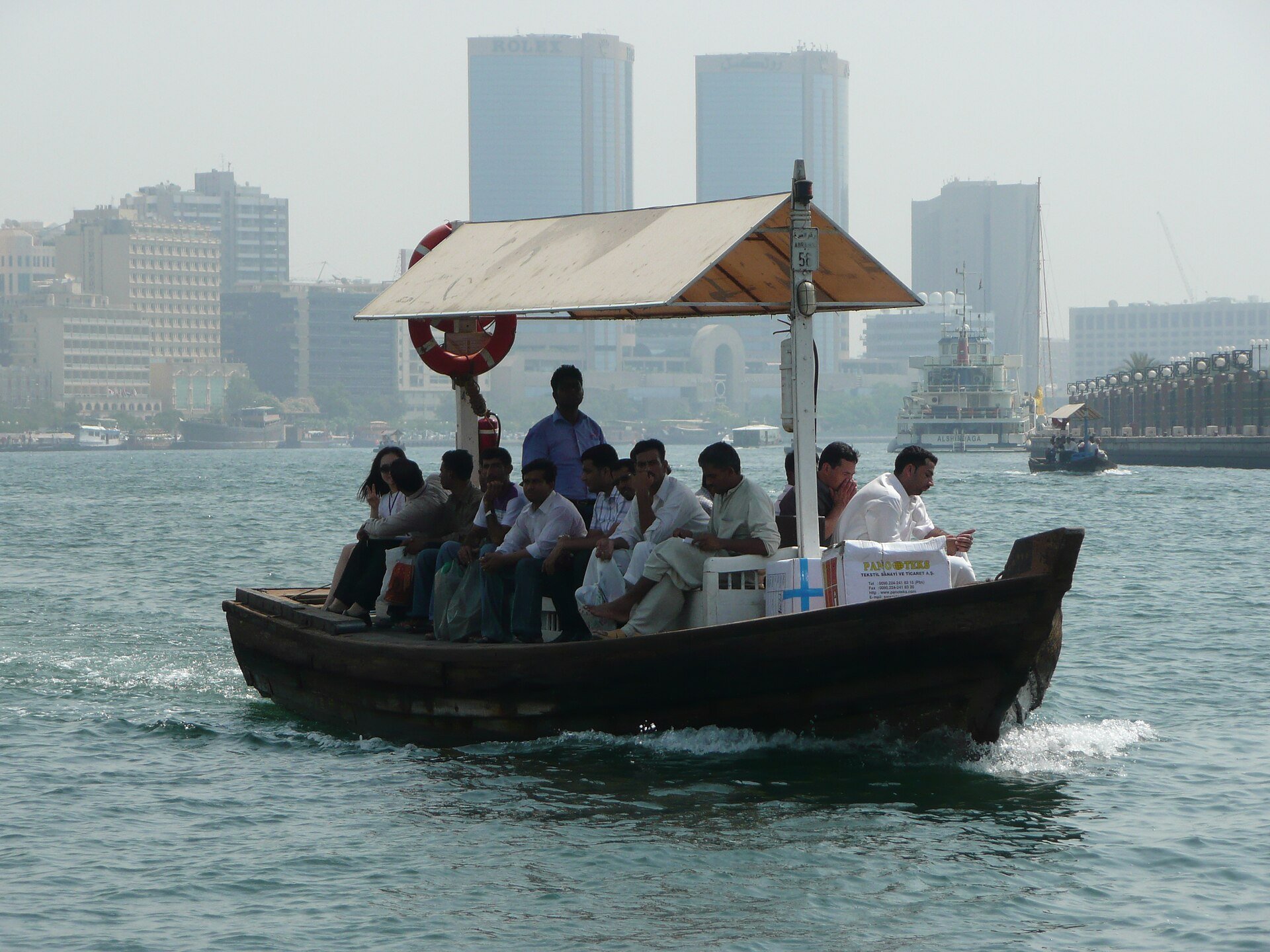
The welcome centre sits on Jumeirah Street near the Umm Suqeim area; most visitors arrive by taxi or ride-hailing, and combine the tour with Sunset Beach next door — the public beach with the postcard view of the hotel — or Wild Wadi waterpark beside it. A lovely rhythm: the tour in the late morning, lunch in nearby Madinat Jumeirah’s souk and abras afterwards, and the beach at golden hour to see the sail lit by the setting sun, when the building’s white fabric glows against the sea.
Is It Worth It?
If you have ever stared at the building from Kite Beach and wondered, yes — the tour answers the curiosity completely, and the Royal Suite alone justifies the ticket for design and architecture fans. If your Dubai time is very short, the free view from Sunset Beach still gives you the icon; but as a one-off treat, Inside Burj Al Arab is the rare famous-hotel tour that actually shows you the good rooms. Book ahead, dress up a little, and enjoy seeing the sail from the inside out.
The Building Itself: A Short Story
Part of what you are touring is an engineering legend. Completed at the end of the 1990s, the Burj Al Arab stands on its own artificial island, built on concrete piles driven deep into the sand beneath the sea. Its mast rises 321 metres, and the vast Teflon-coated fibreglass “sail” that forms its face is a double-layered fabric wall that keeps the interior cool and glows white by day and coloured by night. Every suite is a duplex, every floor is served by panoramic lifts running up the building’s spine, and the helipad near the top has doubled as a stage for famous publicity stunts — tennis matches, car jumps and golf shots that most visitors have seen in videos without realising where they were filmed. The guide’s commentary threads these stories through the tour, which is why even visitors who “don’t care about hotels” come out converted.
Knowing the bones of the building also sharpens the Royal Suite: the leopard-print carpets, the marble, the gold — it stops reading as mere extravagance and becomes a statement by a young city about what it could build. That, in the end, is the real exhibit.
Timing Your Tour
Morning tours are the quietest and give you the softest light inside the atrium for photographs; afternoon slots have a warmer glow and lead naturally into a beach sunset afterwards. In the peak winter season and around holidays, book several days ahead — the groups are kept deliberately small, which is part of the pleasure but means slots genuinely run out. However you time it, arrive unhurried: the check-in, security and transfer to the island run on the hotel’s clock, and the experience is designed to feel like being a guest, not a queue.