Yes, you can live well in Dubai without a car — thousands of residents do. The trick is choosing where to live with the same care you would use to choose the car itself, because the city’s districts differ enormously in how well they are served. Pick a home near a Metro station in one of the well-connected districts, learn the bus and tram network, keep the nol card topped up, and Dubai opens up completely. Here is how the car-free life actually works, district thinking included.
The backbone: the Dubai Metro
The Metro is the spine of car-free Dubai. Its two lines — Red and Green — together link the airport, the old city around the Creek, the business districts, the Marina end of town and several inland neighbourhoods. Trains are driverless, frequent, air-conditioned, and the stations double as cool, clean landmarks with feeder buses waiting outside.
The Red Line runs the length of the city’s main corridor, roughly parallel to Sheikh Zayed Road, which makes it ideal for commuters living in districts like Bur Dubai, Deira and the coastal strip towards Jebel Ali. The Green Line loops through the heart of old Dubai — Deira and Bur Dubai again — serving the souks, government offices, hospitals and older residential quarters that predate the car era. Where the two lines cross near the Creek is where car-free living is easiest in the whole emirate.
Fares are zone-based and paid with the nol card, which also covers buses, the tram, parking meters and even some retail. Prices and card types change from time to time, so check the RTA’s official channels for current fares and concessions before you budget around them.
The tram, the buses and the last mile
The Dubai Tram serves the Marina and Al Sufouh corridor, connecting the Metro to one of the densest residential districts in the city. If you live or work around the Marina, JBR and Media City side of town, the tram turns a sweaty walk into a two-minute glide.
Buses do the heavy lifting everywhere else. Every district has routes; the older districts have many, the newer inland districts fewer but growing. Feeder buses link residential areas to Metro stations on timed loops, and main-road routes run between districts. The RTA’s journey-planning app is genuinely good: use it to test your real commute — home to office, home to school — before signing a lease, at the actual times you would travel.
For the final stretch, residents mix and match: short taxi rides, ride-hailing apps, e-scooters in permitted areas, community shuttle buses run by some developments and malls, and plain walking in the cooler months. Many buildings and malls also run free shuttle services to the nearest station.
District by district: where car-free works best
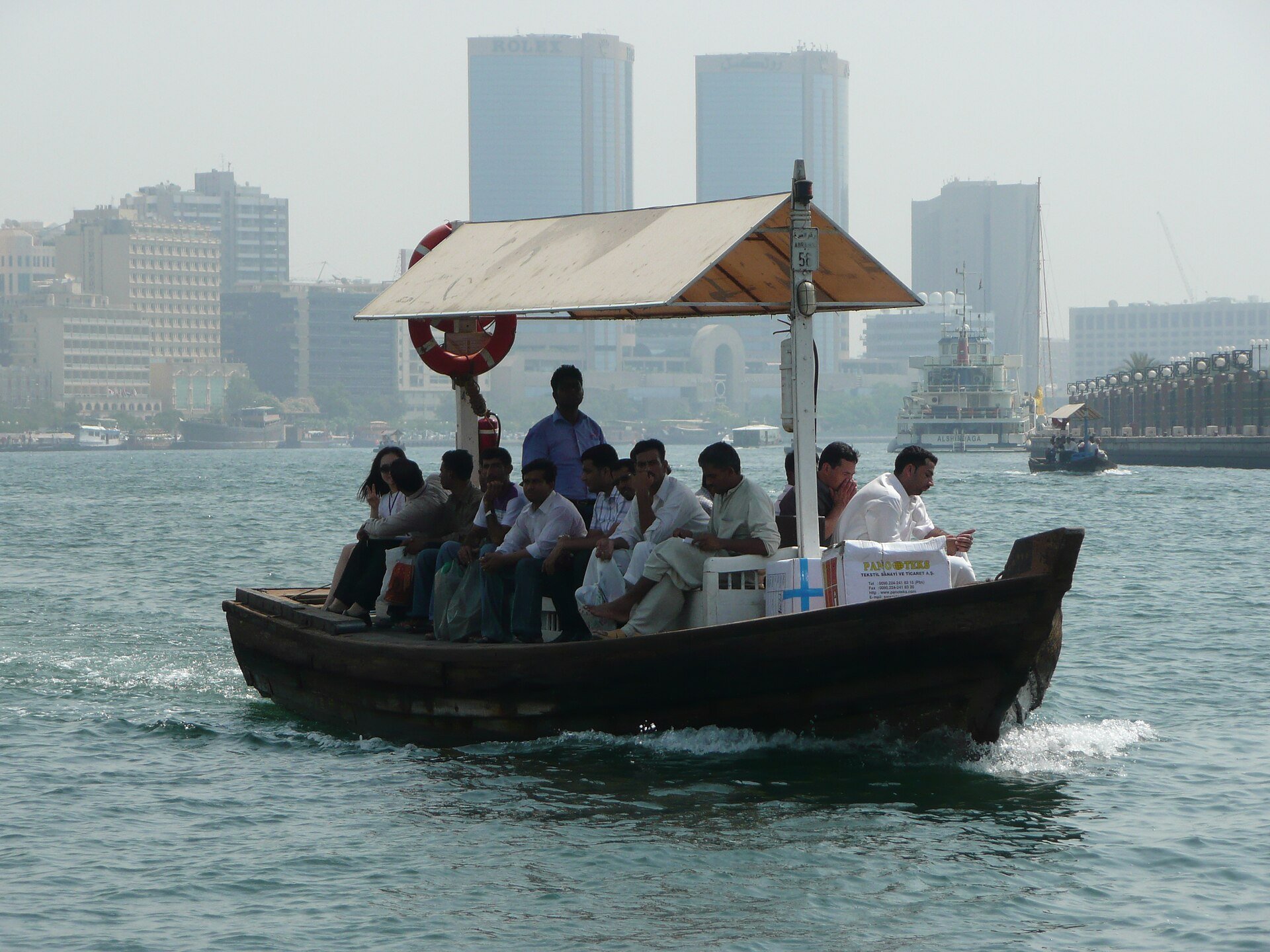
- Deira and Bur Dubai: the strongest districts without a car — two Metro lines, dense bus networks, abras across the Creek, and daily life within walking distance.
- Jumeirah and the Sheikh Zayed Road corridor: workable if you live close to a Red Line station; the beach districts themselves are more spread out, so combine Metro with buses and taxis.
- Mushrif, Ras Al Khor and Zabeel: mixed — key nodes are served, but these greener, lower-density districts reward a hybrid approach with regular taxis.
- DubaiLand, Hadaeq Mohammed bin Rashid and Madinat Al Qudra: the hardest districts without a car today. Feeder buses exist and services grow with population, but most households still drive; budget seriously for taxis if you choose these areas car-free.
- Jebel Ali and Madinat Al Maktoum (Dubai South): the Red Line reaches towards Jebel Ali, which helps commuters; Dubai South is still building its network around the airport city, so check current routes carefully.
- Al Awir and Nakhlat Deira: Al Awir’s rural character means limited public transport; the Palm Deira islands are a developing picture — verify the latest connections before committing.
The honest costs and trade-offs
Car-free living swaps one set of costs for another. You save on car purchase or rental, fuel, insurance, registration, parking and Salik tolls — a substantial monthly sum. You spend instead on nol fares, occasional taxis, and time: journeys involving two changes and a feeder bus take longer than driving, especially cross-town trips that do not follow the Metro’s line.
The other trade-offs are seasonal. From roughly November to March, walking between stops is a pleasure and cycling becomes realistic. In the summer peak, even a five-minute walk at midday can arrive drenched, so car-free summer life means planning shade, timing trips for morning and evening, and treating air-conditioned stations and malls as waypoints. Many residents solve this with a seasonal strategy: public transport in winter, more taxis in August.
A checklist before you sign the lease
- Walk from the building to the nearest station or bus stop yourself — in summer, if you can.
- Run the real commute in the RTA app at rush hour, not midday.
- Check the last train and first bus times against your actual working hours.
- Confirm where the nearest supermarket, clinic and pharmacy are on foot.
- Ask neighbours in the building how they manage — their answers will be brutally honest.
Done thoughtfully, life without a car in Dubai is not a compromise — it is a calmer, cheaper, greener way to live, with the Metro’s quiet glide replacing the Sheikh Zayed Road crawl. Just let the map choose your home, and the city will do the rest.