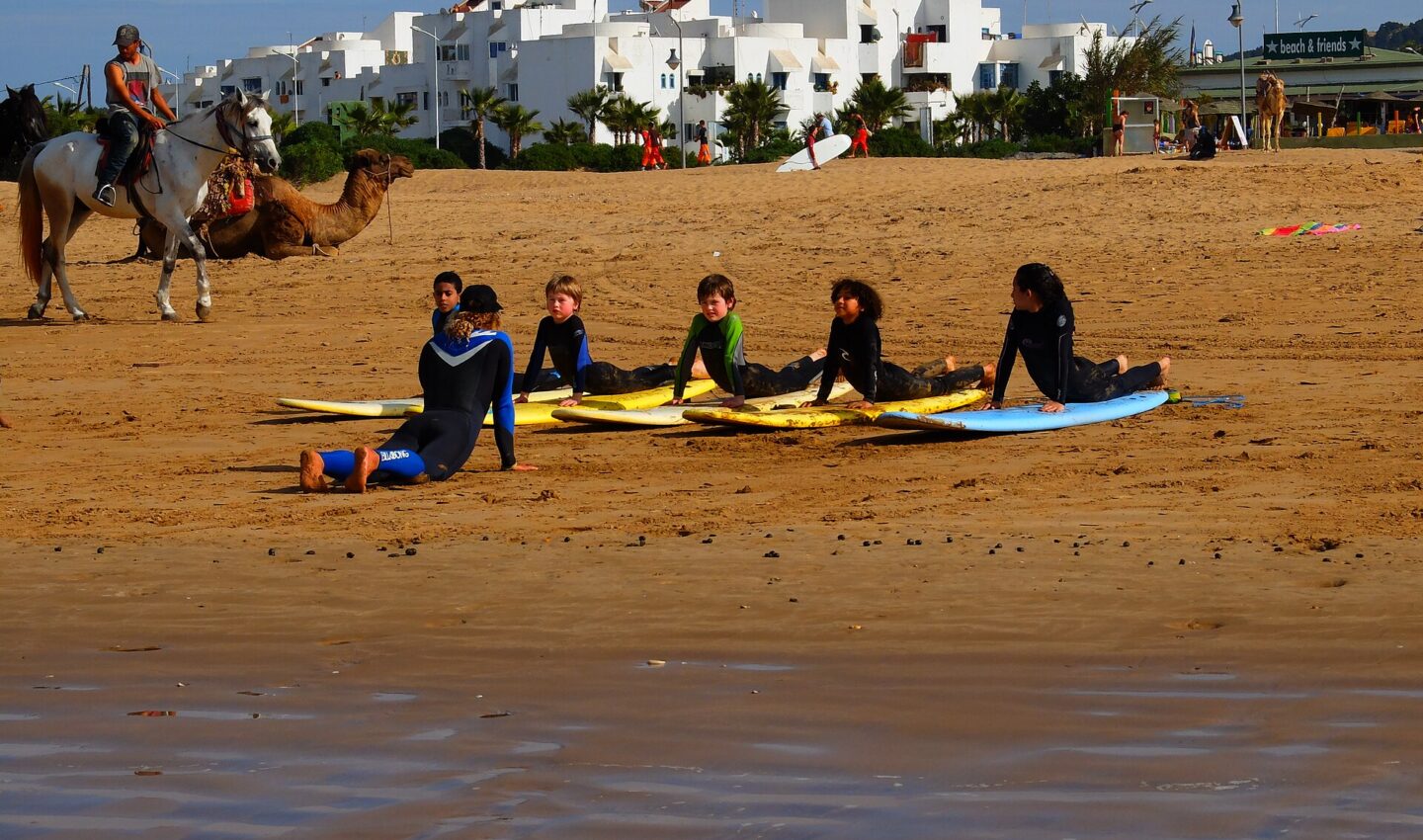
Yes, you can learn to surf in Dubai — and Sunset Beach, in the shadow of the Burj Al Arab, is where most beginners start. The Gulf’s waves are gentle and forgiving, the water is warm for most of the year, and local surf schools run structured first lessons that have most people standing up, however briefly, before the session ends. If you have never touched a board, a beginner lesson day at Sunset Beach is a relaxed, well-organised way in.
When Dubai Actually Has Surf
Dubai is not a year-round surf destination, and honesty helps you plan. The surfable season runs roughly from October to May, when weather systems in the Gulf push small, clean swells towards the coast. Summer is usually flat and extremely hot, and lessons may be limited or cancelled when there is no swell at all. Waves on a good day are typically waist-high or smaller — disappointing for experienced surfers, but close to perfect for learning, because you can practise repeatedly without being punished by the ocean.
Surf schools check the forecast and will reschedule if conditions are flat or unsafe. Book a lesson early in your stay if you can, so a flat day does not mean a missed chance.
What a Beginner Lesson Looks Like
Lessons at Sunset Beach are run by local surf schools and clubs that set up on the sand near the Burj Al Arab end of Umm Suqeim. A typical first session runs like this:
- Beach briefing (15–20 minutes) — how the board works, how to lie, paddle and pop up, practised on the sand first; plus basic safety: where to surf, how to fall safely in shallow water, and rips and currents awareness.
- Guided water time (about an hour) — the instructor stays nearby, helps you catch small whitewater waves and gives feedback after each attempt. Soft-top boards and, if needed, a rash vest are normally included in the lesson price.
- Free practice — many schools let you keep the board for a while after the lesson to practise at your own pace in the same safe zone.
Group lessons are the most affordable way to start; private lessons give faster progress and are worth it if you are nervous in the water. Confirm current prices, schedules and what is included on the surf school’s official page before booking, as these change by season.
What to Bring
- Swimwear you can move in, plus a rash vest or fitted t-shirt for sun and board-rash protection.
- Reef-safe sunscreen applied before you arrive, and a hat and shade for before and after — there is limited shade on the beach.
- A towel, a change of clothes and a dry bag for your phone; public changing facilities and showers are available at the beach.
- Water and a light snack. You will be hungrier than you expect after an hour of paddling.
Good to Know About Sunset Beach
Sunset Beach (also signed as Umm Suqeim Beach) is a public beach with lifeguards, a running and cycling track nearby, cafés along the road, and one of the classic Dubai photographs: the Burj Al Arab framed from the sand. Follow the beach flag system and swim-zone rules, and surf in the areas the school directs you to, away from the main swimming buoys. Parking fills quickly on winter weekends — arrive early, or take a taxi to the beach entrance.
After Your First Lesson
If you catch the bug, the same schools rent boards by the hour on surf days and run multi-lesson packs that take you from whitewater to turning on small green waves. Dubai’s small but friendly surf community gathers at Sunset Beach on good mornings, and a sunrise session followed by breakfast at one of the beach cafés is one of the city’s simple pleasures. Start with realistic expectations — gentle waves, warm water, a patient instructor — and a first lesson here is very hard not to enjoy.
Your First Hour in the Water: What It Really Feels Like
Expect to fall — a lot, and in soft, forgiving whitewater only knee-to-waist deep. The learning curve at Sunset Beach is kind: the instructor positions you, calls the timing, and often gives the board a guiding push as the wave arrives, so your only jobs are to paddle, pop up and enjoy the three seconds of standing before the wave dissolves. Most beginners manage their first proper stand within the lesson; almost everyone manages at least a wobbly crouch and a huge grin. Your arms and shoulders will feel it the next day — paddling uses muscles office life leaves asleep — so plan a gentle following day if you can.
Safety and Etiquette on a Shared Beach
Dubai’s surf zone works because everyone follows a few simple rules. Stay within the area your instructor sets, which keeps learners clear of stronger swimmers and any flagged swim zones. Never drop in on a wave someone else is already riding — in small Dubai surf there are waves enough for everyone, and the local lineup is notably friendly to beginners who smile and wait their turn. If you wipe out, cover your head as you surface and keep hold of your leash so your board does not wash into other people. Finally, respect the lifeguards and the flag system absolutely: a red flag ends the session whatever the surf school says, and the Gulf’s conditions, while usually mild, deserve the same respect as any sea.