Ask ten Dubai residents about living in Mohammed Bin Rashid City and you will get ten confident answers, at least four of which are out of date. This guide sticks to how things work now: the systems involved, the steps in their real order, and the details that decide whether it goes smoothly or becomes a story you tell at dinner.
The case for Mohammed Bin Rashid City
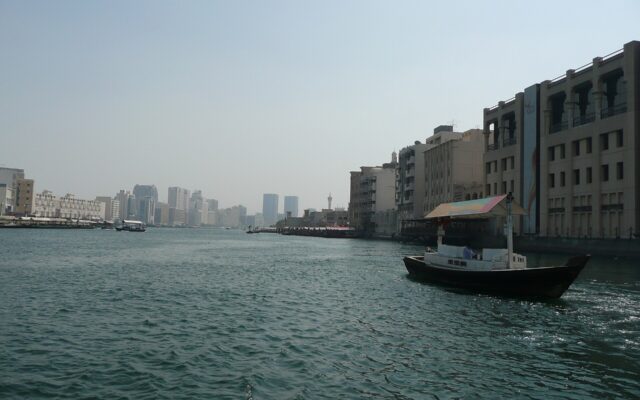
Start with what Mohammed Bin Rashid City gets right. It is a vast master development between Al Khail and Al Ain roads holding District One, Sobha Hartland and the Crystal Lagoon. Residents cite the same strengths: the housing stock suits its target resident, the daily essentials sit close, and the community has a settled feel that newer districts take years to grow. For its price band, the space-for-money equation is the recurring argument — Dubai families trade centrality for rooms, and Mohammed Bin Rashid City is one of the places that trade makes sense.
The lifestyle upside is seasonal: from October to April, districts like Mohammed Bin Rashid City deliver the version of Dubai people move for — outdoor mornings, park life, evening walks. If your life is home-centred, that half of the year weighs heavily in its favour.
The honest downsides
Now the costs. Commuting from Mohammed Bin Rashid City to the main business districts takes real time at peak hours, and public transport coverage is thinner than in the metro-served core — most households here run a car, often two. Construction is a moving fact of life in growing districts, and service-charge or maintenance quality depends on the specific building or sub-community, not the master developer’s brand.
Summer narrows life everywhere in Dubai, and car-dependent districts feel it most: the park, the pool queue and the school run all reorganise around the heat. None of this is unique to Mohammed Bin Rashid City, but you should price it in rather than discover it in July.
Who should and should not choose it
Mohammed Bin Rashid City suits residents whose centre of gravity is home, school and community, and whose work is either local, hybrid, or a tolerable drive. It suits less well the metro-dependent, the late-night socialiser, and anyone whose job could relocate across the city within the year — flexibility is what you trade away for space.
The happiest residents here are the ones who chose it with open eyes for what it is. The unhappy ones bought a brochure version. Visit at school-run time and again on a quiet evening before you decide.
How this connects to the rest of Dubai life
Nothing in this guide sits alone. living in Mohammed Bin Rashid City touches your housing, your banking, your children’s schooling or your employer’s paperwork — usually two of those at once. That is why the sequencing advice in these guides keeps repeating: identity and residency first, then the tenancy and utility chain, then the money systems, then the lifestyle layer. Each completed layer makes the next one a formality.
It is also why small administrative untidiness compounds: an out-of-date phone number on your ID record blocks a bank OTP, which blocks a payment, which blocks a renewal. Keep the foundations current — ID, number, address records, document scans — and the whole city’s machinery stays oiled on your behalf.
Documents and preparation
Dubai runs on a short list of documents that recur everywhere: passport, Emirates ID, tenancy contract and Ejari where housing is involved, salary or income evidence where money is involved, and photographs in the current specification. For anything under this guide’s topic, assemble your set before you start — originals for in-person steps, clean scans on your phone for everything else.
Attestation is the preparation step newcomers underestimate: documents issued abroad (degrees, marriage and birth certificates above all) often need the attestation chain — home authority, UAE embassy, UAE foreign affairs — before a Dubai process will accept them. If your situation touches any of those, start that chain first; it is the longest pole in almost every tent.
Common questions
Can I do most of this online?
Mostly, yes — Dubai has moved the majority of resident transactions into official apps and portals. The steps that still need your presence are usually biometrics, medicals, signatures and original-document sighting. Start online, and attend in person only for the step that requires your body.
Where do residents get reliable local detail?
Community groups for your district, school or workplace hold the lived detail — which branch is quick, what the process felt like last month. Combine that texture with the official source for the rule itself, and you have the full picture.
What is the most common mistake?
Acting on out-of-date advice. Systems here change yearly; a friend’s experience from a previous contract or a previous visa is a starting point, not a rule. The second most common mistake is paying an intermediary for a step the official app handles directly.
Where do residents get reliable local detail?
Community groups for your district, school or workplace hold the lived detail — which branch is quick, what the process felt like last month. Combine that texture with the official source for the rule itself, and you have the full picture.
The bottom line
None of this needs to be stressful. living in Mohammed Bin Rashid City rewards the same three habits as everything else in Dubai: start earlier than feels necessary, keep every reference number, and verify the final step on the official channel. Do that, and consider it handled — and keep dxbtalk.com bookmarked for the next system you meet.