Ask ten Dubai residents about living on Sheikh Zayed Road and you will get ten confident answers, at least four of which are out of date. This guide sticks to how things work now: the systems involved, the steps in their real order, and the details that decide whether it goes smoothly or becomes a story you tell at dinner.
How this connects to the rest of Dubai life
Nothing in this guide sits alone. living on Sheikh Zayed Road touches your housing, your banking, your children’s schooling or your employer’s paperwork — usually two of those at once. That is why the sequencing advice in these guides keeps repeating: identity and residency first, then the tenancy and utility chain, then the money systems, then the lifestyle layer. Each completed layer makes the next one a formality.
It is also why small administrative untidiness compounds: an out-of-date phone number on your ID record blocks a bank OTP, which blocks a payment, which blocks a renewal. Keep the foundations current — ID, number, address records, document scans — and the whole city’s machinery stays oiled on your behalf.
Documents and preparation
Dubai runs on a short list of documents that recur everywhere: passport, Emirates ID, tenancy contract and Ejari where housing is involved, salary or income evidence where money is involved, and photographs in the current specification. For anything under this guide’s topic, assemble your set before you start — originals for in-person steps, clean scans on your phone for everything else.
Attestation is the preparation step newcomers underestimate: documents issued abroad (degrees, marriage and birth certificates above all) often need the attestation chain — home authority, UAE embassy, UAE foreign affairs — before a Dubai process will accept them. If your situation touches any of those, start that chain first; it is the longest pole in almost every tent.
Life along Sheikh Zayed Road
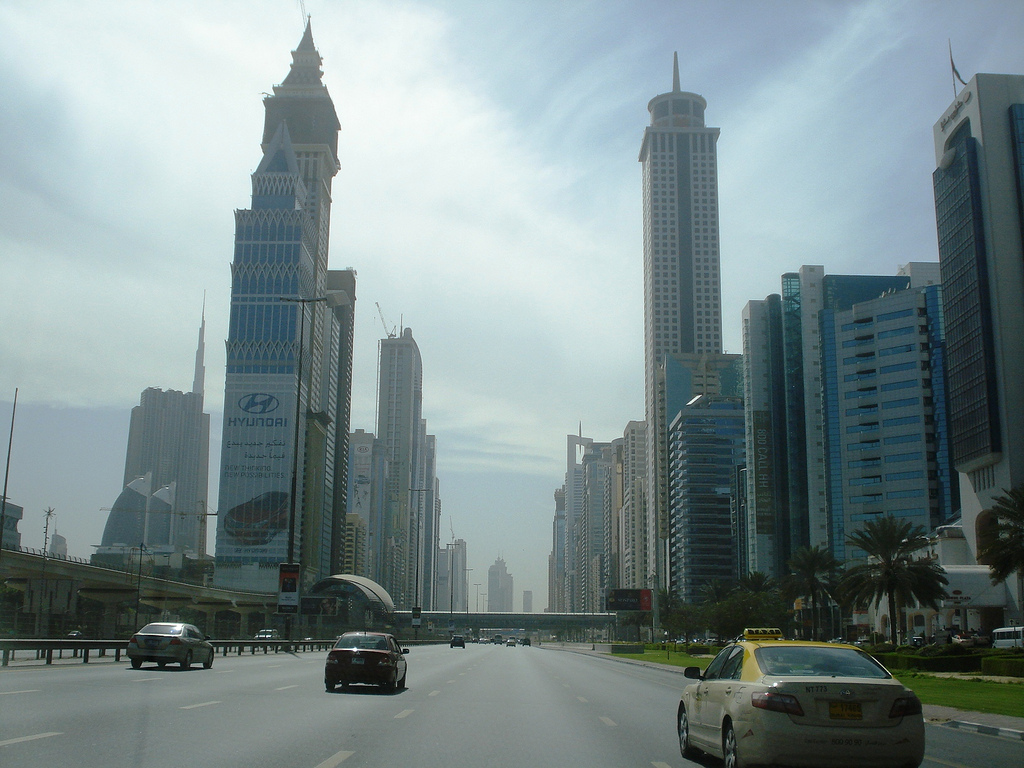
Sheikh Zayed Road is the E11 highway spine of the city, lined with towers from the World Trade Centre to Jebel Ali, carrying the metro along its median. Living ‘on’ a major Dubai road really means living in the band behind it — the towers that front it, the villa streets that branch off it, or the communities whose daily access runs through it. This guide reads Sheikh Zayed Road the way residents experience it: access, noise, crossings, and what the road gives you and what it takes.
The first question is which side of the road your life is on. Dubai’s arterials are wide enough that ‘just across the road’ can mean a ten-minute drive to a crossing — check the actual pedestrian and vehicle routes between your door and your daily destinations, not the straight line on the map.
Access, transport and daily logistics
Roads like Sheikh Zayed Road define commute options: direct highway access if you drive (with the Salik gates on the tolled corridors), parallel service roads and feeder streets for local trips, and — where the corridor carries it — the metro or tram as the sane peak-hour alternative. Bus routes run along most arterials, and taxi drivers know them by their landmarks rather than street numbers; learn your nearest landmark for pickups.
Noise and dust are the standing trade for access. In towers, higher floors and the non-road-facing side change the experience completely; in villas, the streets two rows back from the arterial keep the access and lose the hum. View at night and at morning peak before deciding — a road has two personalities.
The seasonal angle
Almost everything in Dubai has a season. Summer compresses life indoors and slows some official processes as people travel; the winter months crowd the diaries, the roads and the appointment systems; Ramadan reshapes working hours and the rhythm of the day itself. Where timing is yours to choose, choose deliberately: the same task can be a calm errand in one month and a campaign in another, purely because of when the whole city is trying to do it too.
Common questions
Can I do most of this online?
Mostly, yes — Dubai has moved the majority of resident transactions into official apps and portals. The steps that still need your presence are usually biometrics, medicals, signatures and original-document sighting. Start online, and attend in person only for the step that requires your body.
Where do residents get reliable local detail?
Community groups for your district, school or workplace hold the lived detail — which branch is quick, what the process felt like last month. Combine that texture with the official source for the rule itself, and you have the full picture.
What is the most common mistake?
Acting on out-of-date advice. Systems here change yearly; a friend’s experience from a previous contract or a previous visa is a starting point, not a rule. The second most common mistake is paying an intermediary for a step the official app handles directly.
Where do residents get reliable local detail?
Community groups for your district, school or workplace hold the lived detail — which branch is quick, what the process felt like last month. Combine that texture with the official source for the rule itself, and you have the full picture.
The bottom line
The pattern underneath living on Sheikh Zayed Road is the pattern underneath most of Dubai life: the systems work, the paperwork is the price, and preparation is the discount. Do it once, properly, and you join the residents who find this city easy. More step-by-step resident guides live at dxbtalk.com.