
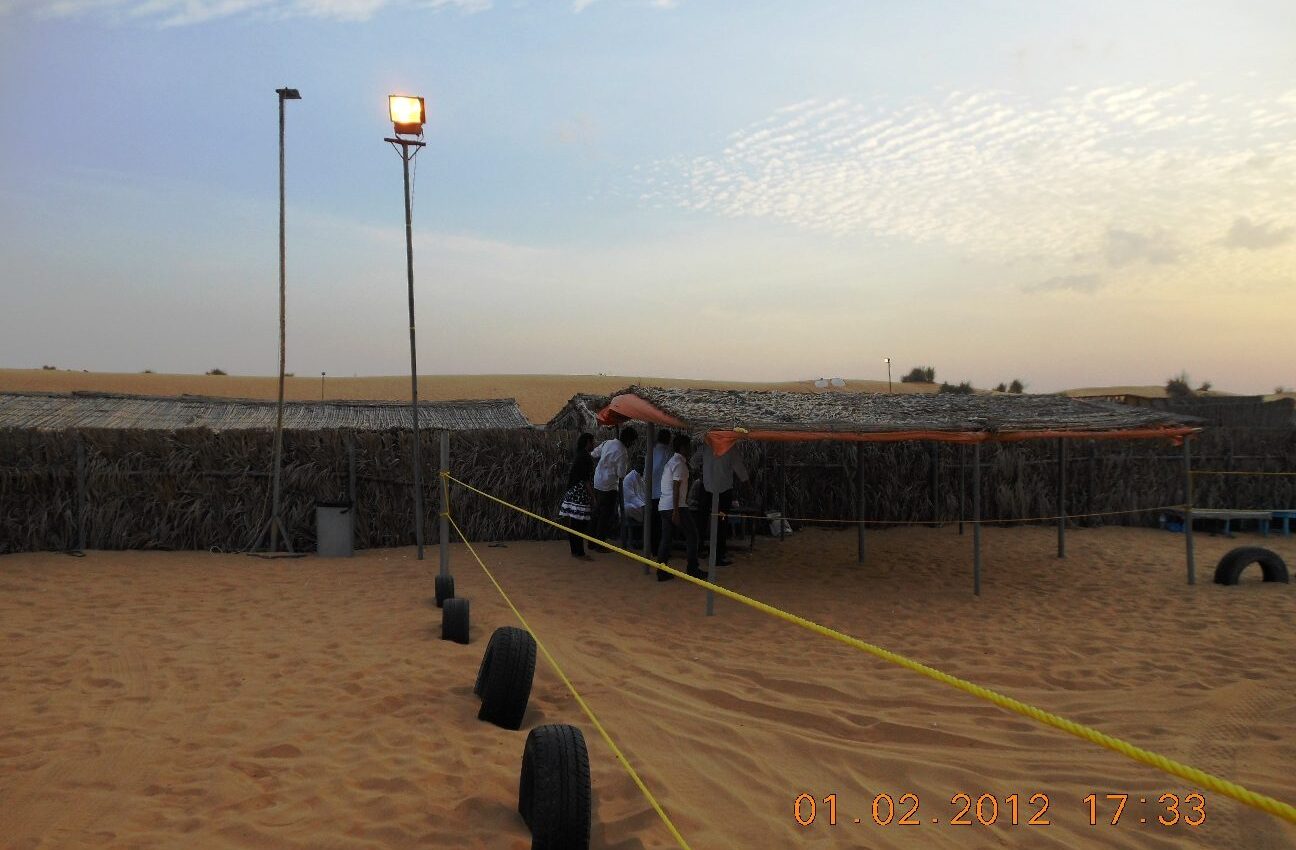
Book a desert safari in Dubai only with a properly licensed tour operator — one with a Dubai tourism licence, insured 4x4s driven by licensed, experienced desert drivers, and a clear written list of what is included — and pay through a traceable channel, not cash to a social media account. A standard evening safari with dune driving, a camp dinner and shows typically costs around AED 150–350 a person; very cheap offers usually cut the camp, food or driving time, or add hard selling later.
Quick facts
- Where: Pick-up from your hotel or home in Dubai, driving to the red dunes near Lahbab or the Al Awir desert area, depending on the operator
- Typical cost: Shared evening safari typically around AED 150–350 per person; private car safaris typically AED 1,000–1,800 per vehicle — check the operator’s current price and inclusions
- Time needed: About 6–7 hours door to door, usually mid-afternoon pick-up and return around 9–10pm
- Best months: October to April for comfortable evenings; summer trips run but the heat changes the experience
Step by step: booking safely
- Check the operator is real and licensed. Look for a Dubai Department of Economy and Tourism licensed company with a physical address, a landline or official WhatsApp, reviews across more than one platform, and a trade name that matches its payment account. Be wary of a “company” that exists only as one Instagram page with stock photos.
- Ask exactly what is included, in writing. Pick-up and drop-off from your location, length of dune driving, sandboarding, camel ride length, sunset stop, dinner menu and whether drinks are included, shows, and whether quad bikes, henna beyond a small design, photos and shisha are extra. Most disappointment comes from extras people assumed were included.
- Ask about the driver and vehicle. How many passengers in the car, is the driver licensed for desert driving, does the car have roll protection and seatbelts for every seat, and what is the minimum age and health guidance for dune bashing? Pregnant guests, people with back or neck problems and very young children should be offered a gentler option or a camp-only transfer.
- Compare two or three quotes on the same basis. A AED 99 offer with an hour’s shared transfer each way, 15 minutes of dunes and paid extras at the camp is not cheaper than a complete AED 250 safari — it is smaller. Compare pick-up type (shared bus to a meeting point versus door-to-door 4×4), dune time and camp quality.
- Book and pay traceably. Pay by card or through a reputable booking platform where possible, keep the voucher, and confirm pick-up point, time, car plate and driver’s number on the day by message. If an operator demands full cash in advance to a personal account and resists sending a voucher, walk away.
- Prepare properly on the day. Wear light clothes, closed shoes or secure sandals for sand, and a jacket in winter months — the desert cools fast after sunset. Take sun cream, sunglasses, motion sickness tablets if you are prone, and only the phone and cash you need; leave passports and valuables at the hotel safe.
- At the camp, agree prices before extras. Quad bikes, dune buggies, photos, special seating and souvenirs are usually extra. Ask the price, duration and insurance position before you ride, wear the helmet provided, and do not let children ride unsupervised or without the operator’s age and safety conditions.
- Know how to complain if something goes wrong. Keep the voucher and messages, raise it with the operator first, and if a licensed operator will not resolve a genuine problem, you can complain through Dubai’s tourism and consumer channels with that evidence.
Private, morning and overnight options
A private safari suits families with small children, photographers and anyone who wants to skip dune bashing or set the pace — you pay for the whole car and agree the plan. A morning safari focuses on dunes, sandboarding and light breakfast without the camp shows, and suits tight schedules. An overnight safari adds tents and breakfast; check bedding, toilets and the temperature for your month before romanticising a winter night that can be genuinely cold.
Costs in AED
Shared evening safaris are typically around AED 150–350 a person, private cars typically around AED 1,000–1,800 for up to six or seven passengers, and premium or conservation-area safaris in vintage or luxury vehicles cost considerably more, often AED 500+ a person — check the operator for the current price. Inside the camp, budget for extras only if you want them: quad biking is often quoted for 20–30 minutes, professional photos are per print or file, and VIP seating packages are an upsell, not a requirement for dinner.
Scams and pressure to avoid
- The too-cheap headline that turns into a bus meeting point, a long wait, minimal dunes and constant upselling.
- Cash-only “agents” in malls or on the street with no licence, no voucher and no company name you can verify.
- Quad bike pressure at a rest stop, including unclear insurance if you are injured — if it is not clear, do not ride.
- Fake reviews and copied photos. Cross-check the company name, licence and reviews in more than one place before paying.
FAQ
Is dune bashing safe for children?
Operators set their own minimum ages and many parents choose a private, gentler drive for under-fives. Children must be properly belted, never on a lap, and if you are unsure, choose a camp transfer without dune bashing.
What should I wear for an evening safari?
Light, loose clothing, secure footwear for walking in sand, sun protection for the afternoon and a warm layer from November to February. Modest dress is appreciated at camp and makes the evening more comfortable.
Can I book a safari without dune bashing?
Yes. Many licensed operators offer a desert dinner or nature safari that drives on tracks to the camp or conservation area. State it clearly when booking so the driver plans your car accordingly.